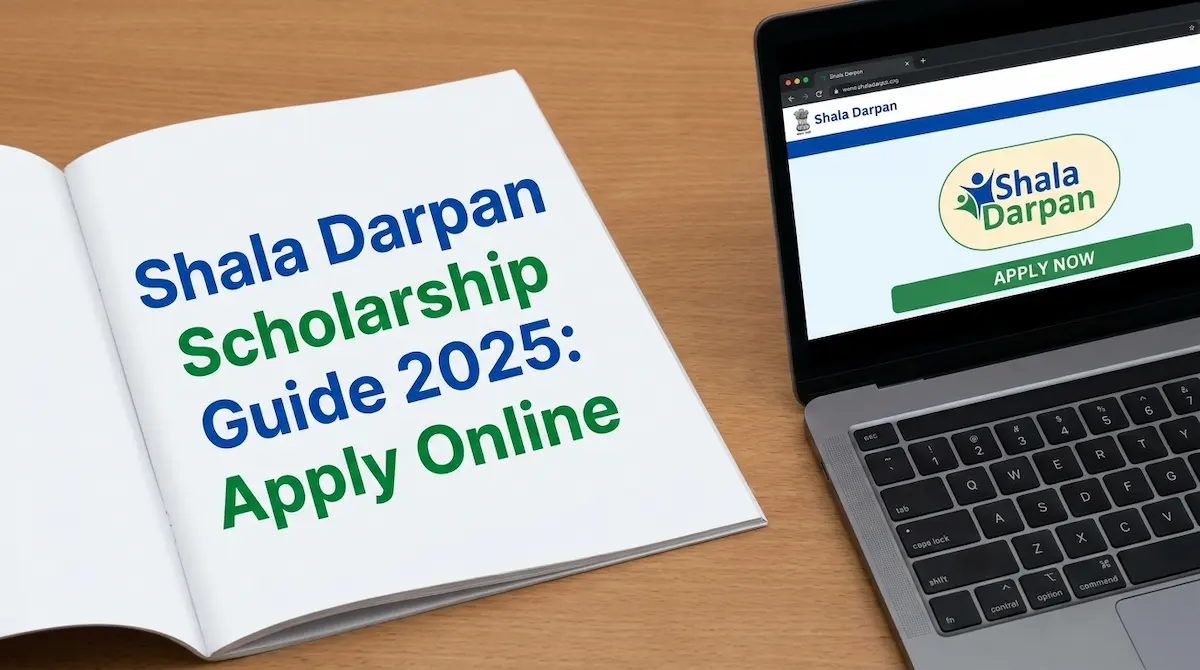
Shala Darpan Scholarship Guide 2026: Apply Online
If you are a parent in Rajasthan trying to get financial help for your child’s education, you have probably heard about government scholarship schemes. But here is what most people do not realise — the entire application process for dozens of these schemes now runs through a single school portal. Miss one step on that portal, and your child’s scholarship application simply does not move forward, no matter how eligible they are.
This guide breaks down exactly how Rajasthan’s school scholarship system works in 2025-26, what documents you need, and the one thing most parents forget to do before the deadline.
Why Rajasthan’s Scholarship System Is Different Now
A few years ago, a parent had to visit the school, fill paper forms, get them signed, attach documents, and then hope the school forwarded everything to the right department. It was slow, easy to lose, and impossible to track.
The Rajasthan government has completely changed this. Almost every major scholarship scheme — Pre-Matric, Post-Matric, SC/ST/OBC/EBC category schemes, National Merit-cum-Means Scholarship (NMMS), and several girl child schemes — is now processed digitally through the school’s portal login. The school staff enters the student’s details, the system auto-fetches most data from the student’s Jan Aadhaar, and the Principal locks and forwards the application online.
This is genuinely efficient when it works. But it also means that if your child’s data on the school’s records is wrong — even a small spelling error in the name, or an incorrect date of birth — the scholarship application will get stuck or rejected without anyone telling you why.
The Scholarships Available for Rajasthan Students in 2025-26
Here is a simple overview of the major schemes currently active:
- Pre-Matric Scholarships (Class 6 to 10) These are for students from SC, ST, OBC, SBC, EBC, and DNT categories studying in Classes 6 through 10. The amount varies by category and gender — girl students generally receive a higher monthly allowance to encourage attendance. For ST students specifically, boys receive ₹75 per month and girls receive ₹125 per month for up to 10 months in an academic year. Benefits also include maintenance allowance, book allowance, and reimbursement of non-refundable school fees.
- Post-Matric Scholarships (Class 11 onwards) For students in Class 11, 12, diploma, degree, or postgraduate programmes. The Social Justice and Empowerment Department (SJE) manages these. Applications for the 2025-26 academic year have been extended, with the latest deadline set for May 31, 2026. If you or your child is studying after Class 10, this is the most important one to check right now.
- Chief Minister’s Higher Education Scholarship Open to all categories — this one requires a minimum of 60% marks in the last qualifying exam and annual family income below ₹2.5 lakh. Students must have passed Class 12 from the Rajasthan Board of Secondary Education (RBSE) in the current academic year.
- NMMS — National Means-cum-Merit Scholarship This central government scheme targets Class 8 students from lower-income families. The eligibility is tracked automatically through school records. Students with strong grades and family income below ₹1.5 lakh annually should ask their school if they qualify.
- Girl Child Specific Schemes Mukhyamantri Hamari Betiya Yojana, Indira Priyadarshini Award, and the free cycle distribution scheme for girl students of Classes 6 to 8 in the EWS category are all processed through the school portal. If your daughter is in a government school, her school is legally required to check her eligibility for these schemes each session.
How the Application Process Actually Works
Understanding this process is important because many parents assume the school handles everything automatically. That is not entirely true.
Step 1: Your child’s data must be correct in the school system
Before anything else, every student’s name, date of birth, father’s name, category (SC/ST/OBC/EBC/General), and Jan Aadhaar number must be accurate in the school’s digital records. In 2025-26, the portal auto-fetches most scholarship eligibility data from Jan Aadhaar. If the Jan Aadhaar has a different name spelling than what the school has on record, the application will fail at verification.
Go to the school at the start of the session — ideally in July or August — and ask the school clerk to confirm your child’s details are updated correctly. Do not wait until October or November when errors are harder to fix.
Step 2: The school initiates the scholarship application
The school in-charge logs into the integrated Shala Darpan portal using their school login credentials. They open the Beneficiary Scheme Portal (BSP) module, which is a dedicated section for processing all scholarship schemes. The student’s details are entered or fetched automatically, and the school verifies attendance status and that no duplicate scholarship exists for the same student in the same year.
This is worth knowing because some parents approach the school expecting to apply themselves online. For most Pre-Matric schemes, the school is the applying entity on your behalf. Your job is to ensure you have submitted the right documents to the school on time.
Step 3: Documents you must submit to the school
Keep scanned or clear photocopies of the following ready before the school year begins:
- Jan Aadhaar Card (the entire family’s card, not just the student’s)
- Caste Certificate (for SC/ST/OBC/EBC/SBC/DNT applicants)
- Income Certificate or Income Declaration Letter
- Previous year’s mark sheet
- School fee receipt for the current year
- Bank passbook (ideally the mother’s account or a joint account linked to Jan Aadhaar)
- Domicile Certificate confirming Rajasthan residency
Note: As of 2026, income is not just self-declared — for higher-value schemes, it is cross-verified against electricity billing records and the Income Tax database. If there is a mismatch, you may need to file a grievance with supporting bank statements or income certificates.
Step 4: The school locks and forwards the application
Once the school has entered and verified the details, the Principal locks the application on the portal. A locked application moves automatically to the Block Education Office (BEO) or District Education Office (DEO) depending on the scheme. From there, it goes to the department for final approval and direct benefit transfer (DBT) to the linked bank account.
After locking, the application status can be tracked online. If your child’s school has submitted everything correctly, you can check status through the Citizen Window on the portal by entering the school details or student information.
The Most Common Reasons Scholarship Applications Fail
After speaking with parents and teachers across Rajasthan, these are the problems that come up most often:
- Jan Aadhaar data mismatch. The name or date of birth in the school records does not match the Jan Aadhaar exactly. The system rejects or flags the application. Solution: Visit your nearest Common Service Centre (CSC) or Saral Kendra to update Jan Aadhaar before the scholarship window opens.
- Income verification mismatch. The system flags the family as being in a higher income bracket than declared. This often happens when there are electricity bills above a certain threshold or bank transactions the system interprets as income. If this happens, file a grievance through the official scholarship grievance portal with bank statements and an income certificate from the Tehsildar’s office.
- School misses the portal deadline. The BSP scholarship window on the portal has a fixed closing date each session. Once it closes, no new applications can be submitted or locked for that year. This is the single most common reason eligible students miss out — not ineligibility, but a missed deadline on the school’s end. Visit the school personally before September to confirm your child’s application has been entered and locked.
- Duplicate scholarship flag. If a student previously received a central government scholarship and the record was not closed properly, the portal may flag them as already receiving a scholarship. This needs to be resolved by the school with the Block Education Officer.
How to Check If Your Child Is Eligible Right Now
You do not need to visit the school to check basic eligibility. The Citizen Window on the integrated school portal has a Scheme Search function. Enter your school name, district, or student details to see which schemes your child currently qualifies for based on their enrolled class and category.
For parents researching how the portal works and how scholarship data connects to student records, the most thorough explanation of how the integrated system manages student profiles, attendance, and government scheme eligibility can be found on Shala Darpan — a resource that breaks down the portal’s features in plain language for parents and teachers who find the official government interface difficult to navigate.
Important Dates to Know for 2025-26
- Post-Matric Scholarship (SJE) — Extended Deadline: May 31, 2026
- Pre-Matric schemes (SC/ST/OBC, Classes 6-10): Typically close September–October each session
- STSE Examination Scholarship: Application deadline was March 12, 2026 (check for next cycle)
- BSP portal scholarship entry window: Usually open July to September — confirm with your school
These dates can shift based on government notifications. The safest approach is to check the official Rajasthan Scholarship Portal (scholarship.rajasthan.gov.in) and the BSP section of the school portal at the start of every academic session, and not rely on the school to remind you.
A Note for Parents of Students in Private Schools
Many parents assume scholarship schemes only apply to government school students. That is not entirely true. Several Pre-Matric and Post-Matric schemes are open to students in recognised private schools as well, as long as the school is registered with the Rajasthan Education Department. However, the application still runs through the school’s portal login, which means the private school must be actively participating in the BSP module. Ask your school’s administration in July whether they process government scholarship applications — if they say no, escalate to the Block Education Officer because recognised private schools are required to facilitate this.
Final Takeaway
Rajasthan has built one of India’s more comprehensive digital scholarship systems. The money is real, the schemes are active, and the portal works well when everyone does their part. The problem is almost never eligibility — it is almost always a data mismatch, a missed deadline, or a document not submitted to the school on time.
Start early every session. Verify your Jan Aadhaar data in June or July. Submit documents to the school before August ends. Follow up in September to confirm the application has been locked. That is the entire process. Everything else — the verification, the approvals, the bank transfer — happens automatically once the school has done their part correctly.
Your child’s scholarship is not something to wait on. The deadlines are real, and the window closes every year whether you act or not.
Thanks for visiting pppharyanaa.com