PPP Haryana: New Electricity Meter Rule to Split ID
The landscape of the Parivar Pehchan Patra (PPP) has shifted from a simple administrative database to a high-integrity digital gateway. In 2026, the Haryana government moved away from the “Self-Declaration” era. Today, family separation is governed by Data-Integrated Verification, where digital footprints—not just paper affidavits—prove the existence of a separate household.
The “Why”: Crackdown on Artificial Splits
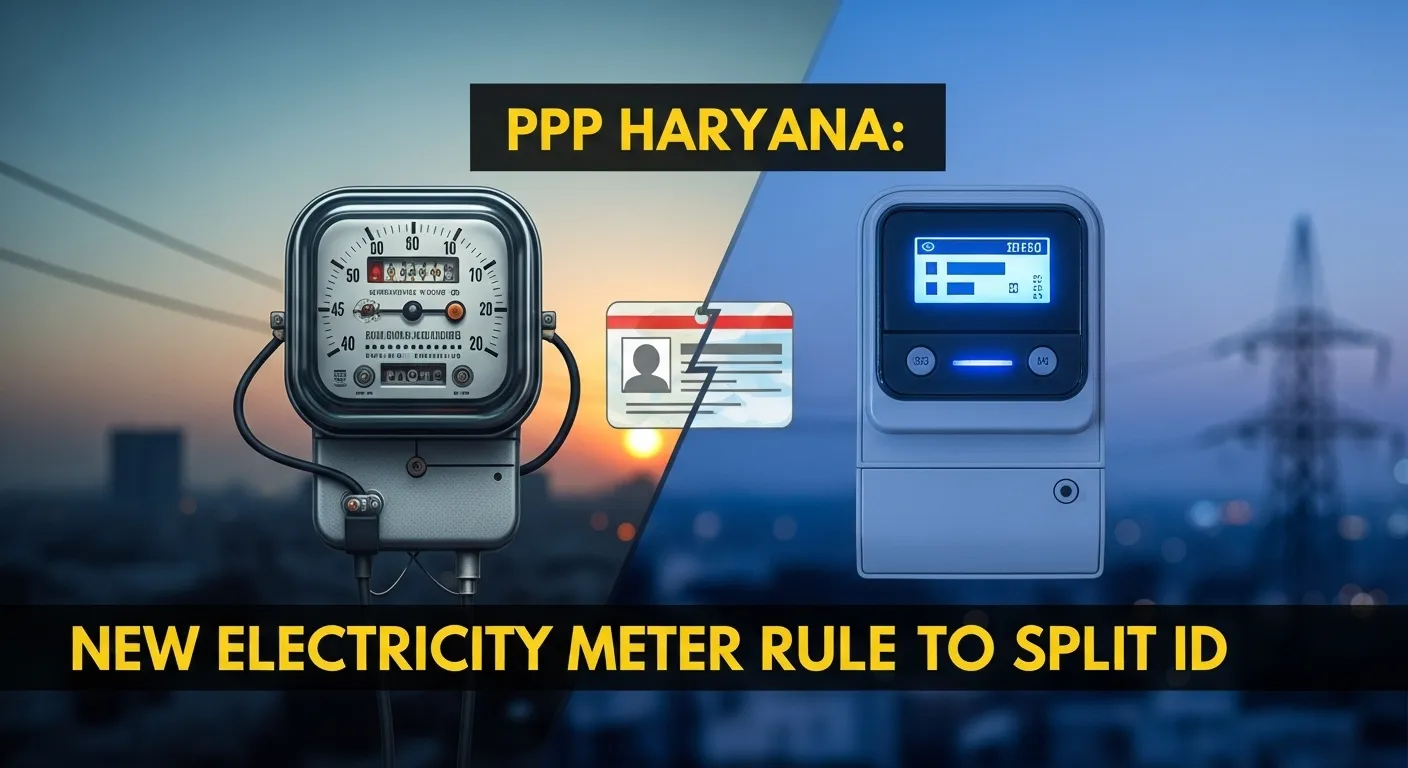
The primary reason for this transition is the elimination of “Artificial Splits.” Previously, many families separated their IDs on paper simply to lower their per-capita income and qualify for BPL benefits or Ayushman Bharat. To counter this, a separate electricity meter is now the mandatory “Proof of Kitchen,” acting as a physical and digital signal that a separate unit truly exists.
The 2026 Mandatory Criteria for Family ID Separation
Why the “Split Family” Button is Disabled for Many
You may notice the “Split Family” option is often greyed out or inactive. This is due to the CRID (Citizen Resources Information Department) lockdown. The system now requires a prior link to a Property ID (PID) or a unique Utility Consumer Account before the separation logic is even triggered. Without these “entity signals,” the portal blocks the request to prevent system spam.
The Electricity Meter Mandate: CA Number Verification
In 2026, the Consumer Account (CA) Number is the ultimate validator. The PPP portal now features a real-time API bridge with UHBVN and DHBVN databases. To qualify, the meter must be registered in the name of the new Head of Family (HOF). If the CA number is already linked to the original Family ID, the split request will be auto-terminated.
Step-by-Step Process: Splitting PPP ID via the Correction Module
Phase 1: Obtaining the Digital Prerequisites
Before logging in, ensure you have a dedicated electricity bill. The CA Number must be unique. Most importantly, your Aadhaar address must match the utility bill perfectly. Discrepancies here trigger NLP mismatches (natural language processing errors), where the AI perceives the two addresses as different locations, leading to immediate rejection.
Phase 2: Online Application through the “Mera Parivar” Portal
Log in to the Mera Parivar portal and navigate to the Correction Module. Do not use the “New Registration” tab for existing members. Select the “Split” option and enter the new CA number. This triggers the “Electric Logic” check, which validates your separate residency status against power utility data.
Phase 3: The Verification Workflow
Digital approval is only the first gate. Your request will be forwarded to a Local Committee (LC). They perform a physical audit to confirm a “Separate Kitchen” status. Once verified, the Additional Deputy Commissioner (ADC) office provides the final digital signature to generate your new 8-digit Family ID.
Required Documents for a Successful 2026 Split
- Primary Signal: Latest Electricity Bill (showing an active, unique CA status).
- Address Proof: Aadhaar or Voter ID updated with the specific house/ward/floor number.
- Legal Proof: A registered rent agreement (for tenants) or a partition deed/registry (for owners).
- Declaration: A signed, scanned PDF of the “No-Govt-Job” and Income self-declaration form.
Common Rejection Reasons & Expert Troubleshooting
“CA Number Already Linked” Error
This occurs when the electricity meter is already tied to an existing PPP unit. In multi-story houses with shared meters, you cannot split the ID digitally. To comply with 2026 standards, you must apply for a sub-meter with a unique CA number or a new connection via UHBVN/DHBVN.
Address Discrepancy (Ward/Village Mismatch)
If your Aadhaar and Bill addresses differ, the system flags a mismatch. You must update your Property ID (PID) on the ULB Haryana Portal first. Once the PID is corrected, the PPP portal will sync the data, allowing the split to proceed.
Impact of Splitting on BPL and Ayushman Benefits
Splitting creates a new economic unit. The system recalculates individual income for the new ID. If the verified income of the new unit stays below ₹1.80 Lakh, BPL and Ayushman (Chirayu) benefits usually reflect in the EPDS (Ration Card) database within 15–30 days post-approval.
Frequently Asked Questions
Can I split my Family ID without a separate meter?
No, in 2026, a unique CA number is the mandatory digital proof for separation.
How long does LC verification take?
Typically 10–30 days. If pending longer, file a grievance on the CM Window.
Does splitting affect my Old Age Pension?
No, as long as age and income remain verified within the new ID unit.